 Joel Artista
New feature by Sahar Sarshar for Voice of America
Posted on November 4, 2013
A Farsi version of this feature will be airing on VOA’s Farsi channel for Iranian viewers this week. Thanks to Sahar Sarshar!!!
From the Ashes: the Power of a Second Chance
Posted on November 1, 2013

Bloomington, IL 2013: “From the Ashes” created with students from the Regional Alternative School.

The student participants from the Regional Alternative School.
“From the Ashes” was a homecoming for me—literally. I left my hometown of Bloomington-Normal, Illinois when I was 18 and have since lived in Chicago, San Francisco, Washington DC and Brooklyn as well as stints in places like Rio de Janeiro, Nairobi, Santiago de Cuba, El Salvador, Cape Verde and on and on… I’ve always gone back home regularly to visit my parents, and the idea came up on many occasions to organize one of my art & social action projects there.
The opportunity finally came by way of local partners who came together to help organize and fund the project. I worked with a group of high school students at the Regional Alternative School who had, for a variety of reasons, not been successful at their traditional high schools and now were being given a second chance at getting an education. I’ve always especially enjoyed working with kids who’ve had a rough time in life, the ones who are considered “challenging” but who I often find to be the most interesting and inspiring. This is probably partly due to my own adolescence, when I had a few challenges of my own. While I wouldn’t compare my experience to some of the severe cases that I’ve come across in my work with young people, I remember feeling isolated and misunderstood, and acting out in a variety of ways: vandalism, shoplifting, drugs… and then a relationship I was in when I was only 15 and 16 years old resulted in pregnancy. While my relationship with my son ended up being one of the best things that ever happened to me, it was quite a shock to my teenage mind to discover that I would be a father—so much responsibility at such a young age!

One of many workshops that led up to the design and creation of the mural.
The first week with the students was all in the classroom. We discussed issues important to their lives and their communities and came up with the theme of “Second Chances” for our project. We studied mural art and its impact on humanity from ancient cave paintings to modern street art and graffiti, took turns drawing each other in different poses, learned a variety of artistic skills and concepts, played games, wrote poetry and songs based on our theme, and created individual works of art. All of this led up to the design of our mural, which we painted over the course of the second week.
Using their ideas, I came up with a design that had several principal figures but that had room for each individual to express themselves through their poems, abstract designs, drawings and written messages, all inspired by the importance of second chances in life, of recognizing unrealized potential, and of the possibility of the rebirth. The students were excited about the project, especially as they have no art in their normal curriculum. It was amazing to watch them represent their own experiences and feelings on the wall, putting it out there for the world to see. One bright, energetic 16- year- old girl pointed to a heart she had painted that had been stitched up. “This is my symbol,” she said, and told me that her childhood had been rough and she had experienced a lot of heartache in her family, but that she had made it through and was feeling positive about her future.
We had a great time painting, being interviewed by local media (TV, radio, front page of the local newspaper!) and coming up with a presentation for the inaugural event, which took place on a beautiful autumn Saturday in the parking lot in front of the mural. There was a big turnout, with friends and family members, local officials and even the mayor, who gave the inaugural speech. I spoke as well, as did three of the students. Thanks to all the sponsors who made this experience possible: the Downtown Bloomington Association, the Mirza Arts & Culture Fund, the Illinois Prairie Community Foundation, and a big thanks to the students and staff of the Regional Alternative School for all your hard work!!! –Joel B


Painting a Syrian Refugee Camp: the Za’atari Project
Posted on June 28, 2013
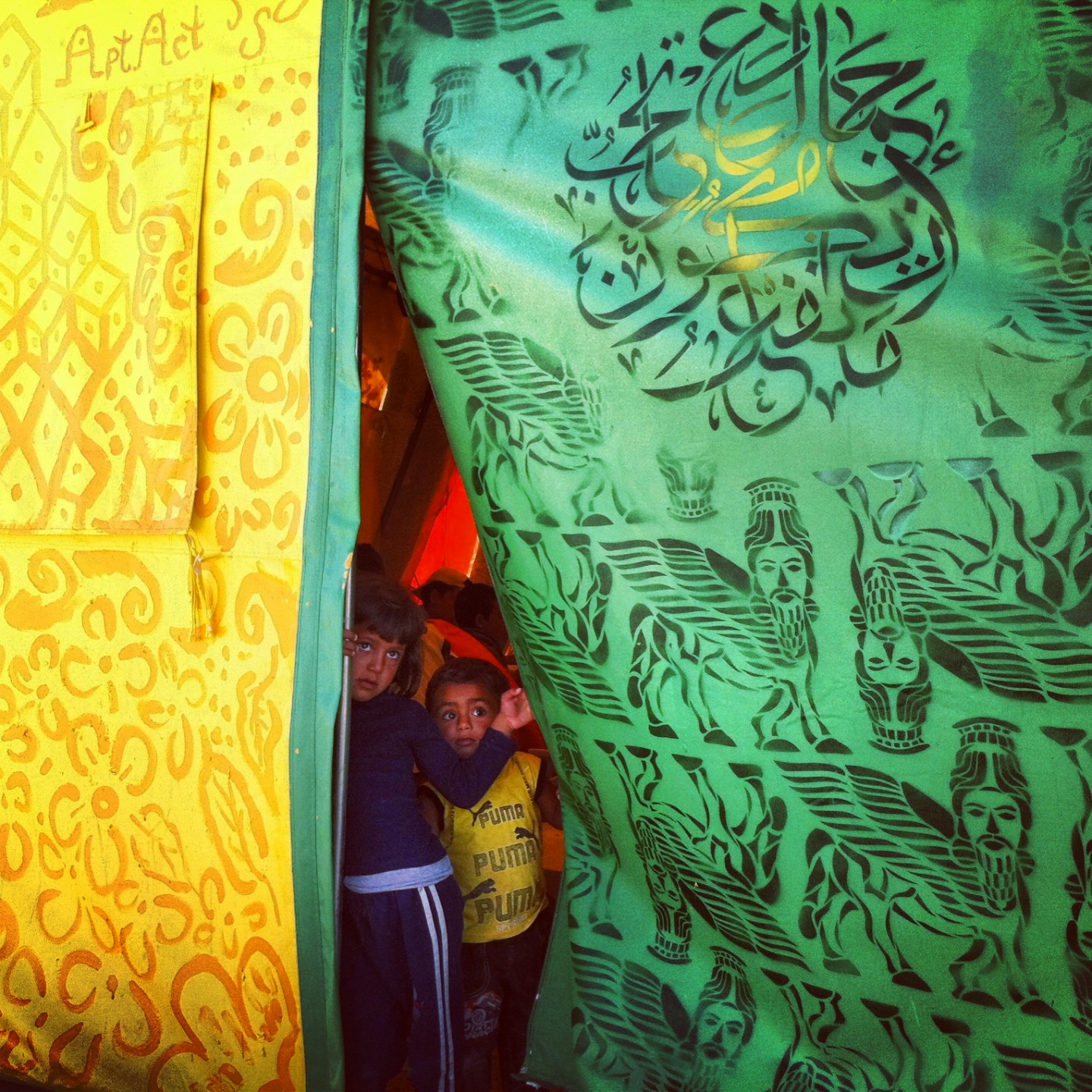 The Syrian Refugee Youth Arts Project in the giant Za’atari refugee camp in northern Jordan took place in June and July of this year. For this initiative I teamed up with international artists, Syrian refugees and child participants to explore important issues in the camp and the residents’ hopes and dreams for the future of their nation. We painted collaborative murals on tents, washrooms, a hospital and will soon be painting a school. We also created stencils, led art and educational workshops, and organized a day of kite-making and decorating. The project is a collaboration with the global humanitarian agency ACTED and the arts organization APTArt and features a team that includes myself, Syrian artist Jumana Hokan, South African artist Luc van der Walt and US artist Samantha Robison in collaboration with a big group of Syrian refugees and dozens of children and teens. –Joel B


Frustation in Za’atari Refugee Camp
Posted on June 27, 2013

Soldiers with tanks are stationed around the camp to prevent refugees from leaving (photo by my friend Max Frieder)
One afternoon, after the kids had left for the day and we artists were putting some finishing touches on a mural on the outside of a large tent that serves as a community center, we began to hear shouting coming from inside the tent. There had been a meeting going on between local “street leaders” in that area of the refugee camp and one of the organizations that provides services such as water and sanitation. The tension was evident as the polite conversation quickly heated up and devolved into an emotional display of anger. The refugees’ frustration in Za’atari is becoming infamous as news stories consistently show protests that include rock- throwing, property destruction and attacks on international organizations and the Jordanian soldiers. Many are unhappy with the fact that Jordan’s government has forced some refugees to live in dry, desolate places like Za’atari and has prohibited them from working in the country. According to humanitarian workers with experience around the world, the services in Za’atari are far superior to those in other such camps around the world, but for these Syrians it is a big step down; most come from Da’ara, where they were used to green landscapes, flowing rivers and a seemingly endless water supply. Now they find themselves in a blindingly bright white moonscape without a trace of plant life, having to deal with rations on services such as water and food. The heat is exhausting and the wind blows dust everywhere, even creating dust storms that look like mini-tornadoes.

Za’atari refugee camp: photo by Max Frieder
At some point, the argument reached a boiling point and someone got punched. We immediately got evacuated to a nearby caravan for fear that the violence would escalate further, or even that the presence of foreigners could further inflame their anger. A family welcomed us with the sweet, strong Arabic coffee that I’ve quickly come to love here. A middle-aged man sat and talked to us about his life in Syria, where he worked in the government’s security agency until the conflict began, at which point the killing of civilians horrified him to the point that he quit his job and fled with his family. As I listened to his story, I thought about how frustrated I would be to have my life on hold, waiting for what seem like eternity in a dusty, hot wasteland. Yet so many of my friends here are like this man; so welcoming and generous with what little they have.
Arrival at Za’atari Syrian Refugee Camp
Posted on June 11, 2013
 I arrived at the airport in Amman, Jordan at around 5:30 this morning and headed to meet up with everyone from the organizations I’ll be working with, APTArt and ACTED. I was surprised to learn that we would be heading to the camp right away! After a quick cup of coffee we were on our way through the desert-y scenery to an area near the border of Syria where a massive refugee camp has sprung up and, in only 9 months, has swollen to 120,000 people! I was impressed to see that the humanitarian agencies, including ACTED who contracted us for this project, have kept this vast tent city very clean and stocked with rations of food, water, housing, and other basic living necessities. Despite this, there is a great deal of chaos here; many times a day, frustrated refugees protest and riot, often throwing stones at aid workers, and we were instructed to evacuate immediately when this happens. Our team includes artists from Syria, Jordan, South Africa and the US who are being organized by the global arts organization AptART.
 Our goal here is to use public art to channel the children and teenagers’ energy to beautifying their new community, communicate messages of hope to their fellow residents, and reach the outside world to raise awareness of their plight, as the international media will be covering the project. We intend to set up an initiative that will continue long after we, the international artists, have left the camp. This week we focus on meeting with the community to discuss the themes, imagery and locations of the murals. –Joel
New piece up in 5 Pointz! “The Plague Doctor”
Posted on June 4, 2013

This week I had the honor of painting in the legendary graffiti spot 5 Pointz, where I did a piece featuring a plague doctor, who were doctors in Old Europe who attempted to cure people from the bubonic plagues and other horrible illnesses. They famously wore bird-beaked masks filled with nice-smelling incense in order to avoid catching the plague, as they believed that foul odors caused the sickness. Unfortunately for them this was not the case, and many died. Next to him I painted a dying or dead guy in a shopping cart. The meaning of all this? I have some ideas, but I leave it to the viewer to interpret…
5 Pointz is in Long Island City, Queens, NYC, one of the world’s most famous graffiti locations with hundreds of pieces that continuously rotate as new artists come to paint over the older work. Visit this amazing cultural landmark while you can, as it’s scheduled to be turned into condos in this “up-and-coming,”– AKA gentrifying– neighborhood of NYC. Channel 2 News did a story on it, which I was interviewed for:
Graffiti Artists Ready To Fight To Save Iconic ‘5Pointz’ Building In L.I. City
Screening of Documentary Tomorrow!
Posted on May 30, 2013
Hey DC people! Tomorrow, Fri. May 31st, I’ll be heading to DC to screen the new documentary “My Tribe is Kenya,” about our project in the Kibera slum of Nairobi, Kenya earlier this year. The screening will take place at one of my favorite DC spots, BloomBars in Columbia Heights on 11th and Kenyan NW. The doc is only half an hour long so I’ll be presenting some other short films of my art and social action projects and speaking about the project. Hope you can all make it!
Here’s the trailer:
City of God/ Cidade de Deus: Rio de Janeiro
Posted on May 3, 2013
 It’s been a jam-packed month in Rio de Janeiro, def one of my favorite places in the world. In what has become a regular gig, I worked with the young folks at ASVI, a community organization in the favela City of God (Cidade de Deus) in Rio’s western zone, to create a series of works of public art pieces and learn about important community issues. A great friend of mine, the super community-oriented Anglican priest Nicholas Wheeler, organizes the project and funds it through the Church in London. Nicholas is my favorite kind of religious guy; focused on uplifting the neighborhood and working with everyone to achieve this goal, including people like me who are not members of the Church or even Christianity. There is so much more that unites people when we can agree upon common goals, instead of the destructive tendency to focus on that divides us.
We first worked on a mosaic piece, which was way more work than I expected! But the kids had a lot of fun with it and learned a new set of skills. We also created two murals that used familiar biblical stories to explore current social and community issues, and liven up some of the squares in the City of God. I also got a chance to get out in the city and go to the beach, catch some live samba and other parties, and of course catch up with my friends here in Rio and meet some amazing new people.

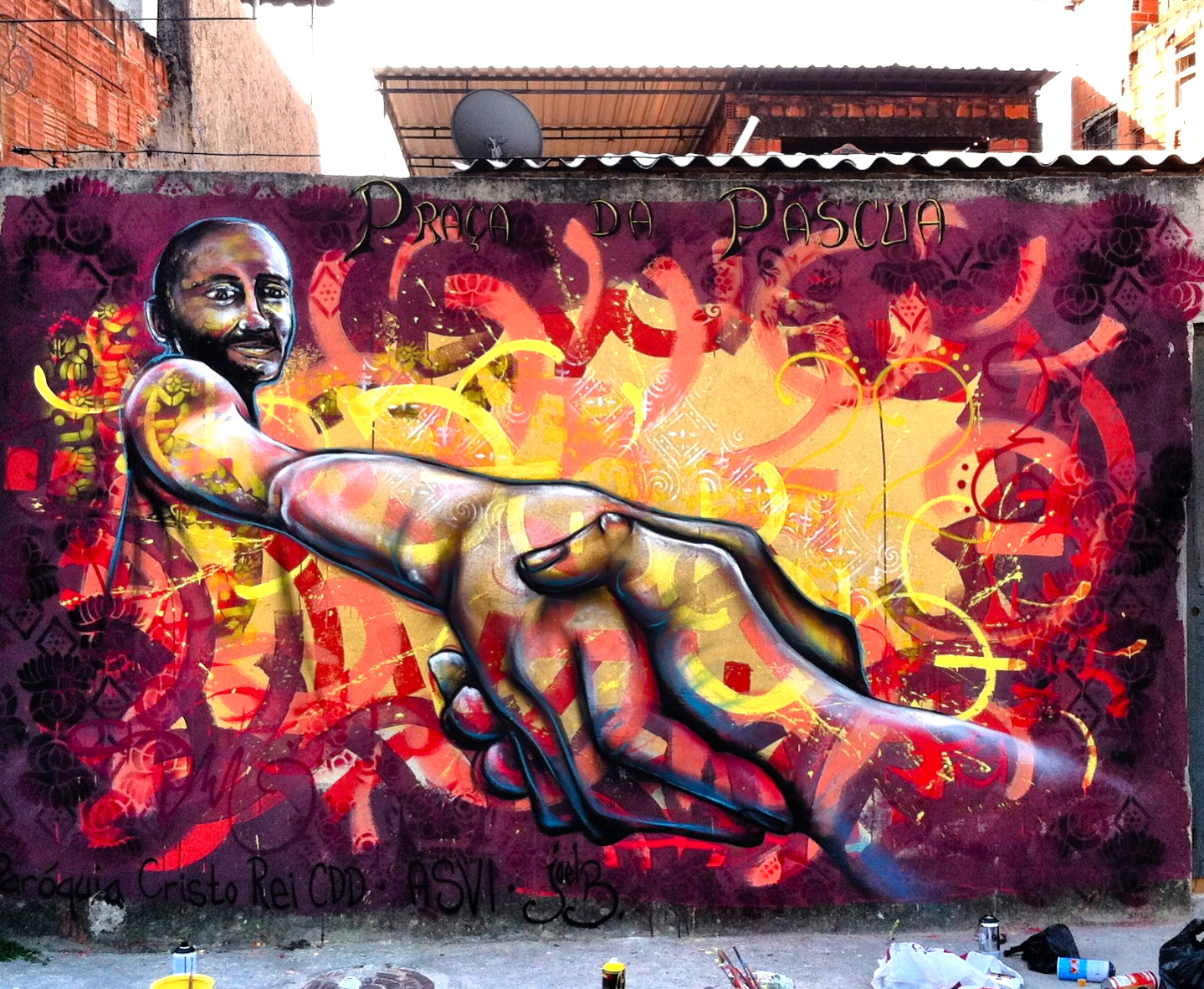

A new piece in the Plaza of the Prophets. All the plazas and streets in the City of God have biblical names, so the murals combine these familiar themes with current social issues relevant to the community. The youth contribute to the themes and designs.

The kids working on the mosaic.
Quilombo
Posted on May 1, 2013
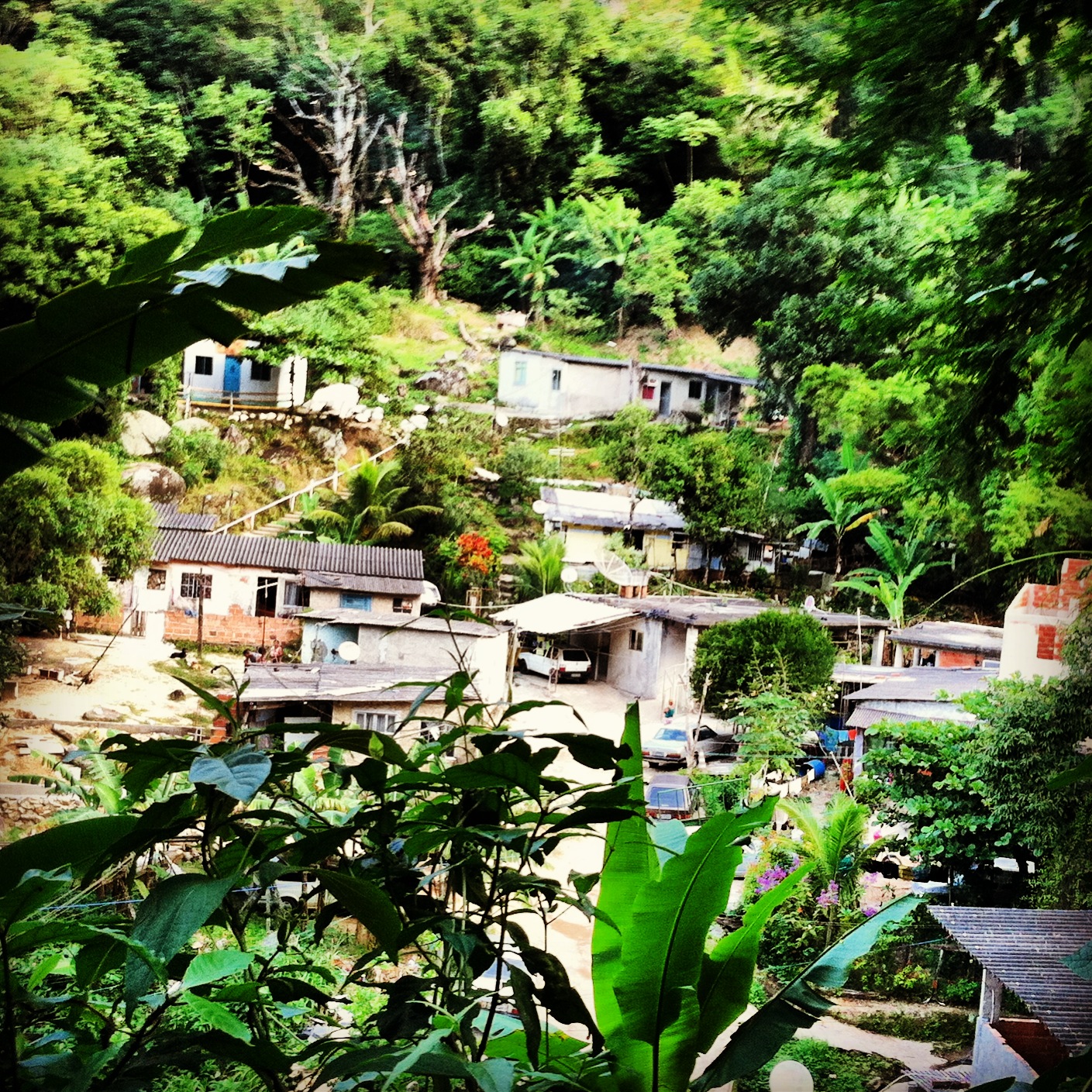 One of our most interesting experiences here in Rio was visiting a quilombo, which were independent communities of runaway African slaves along with their Indigenous allies and even a few poor whites, all of whom escaped from the tyranny of the Portuguese elites and plantation owners during colonial times. There are some quilombos that continue to exist today, including this one right in a hill within the city limits Rio, which has survived since the late 1500’s!!! They told me that 70% of residents are ancestors of the original quilombolos.
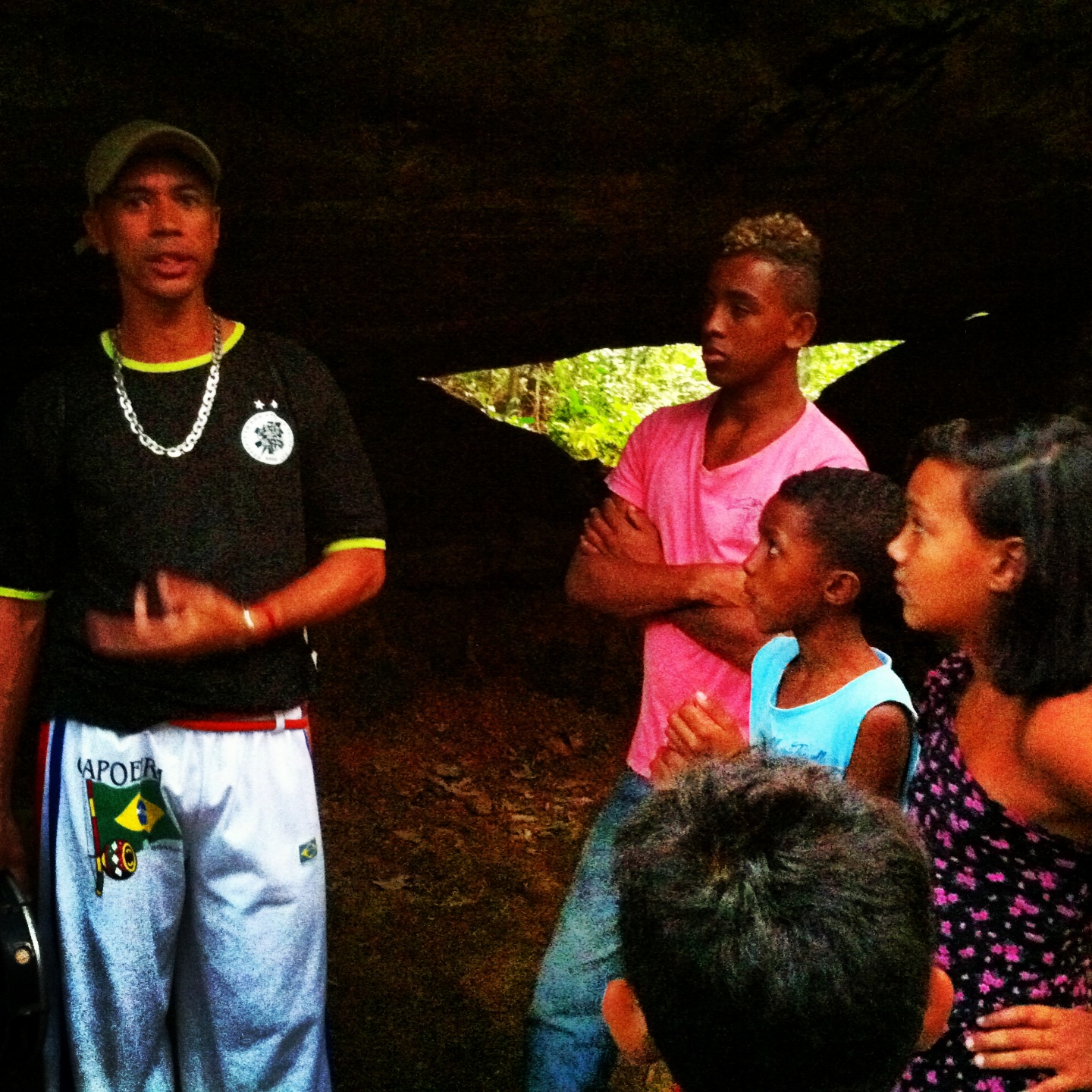
Edilson shows us where his ancestors, escaped slaves, lived under a huge rock centuries ago on a hill in Rio de Janeiro.
The Evolution of the Favelas of Rio
Posted on April 18, 2013
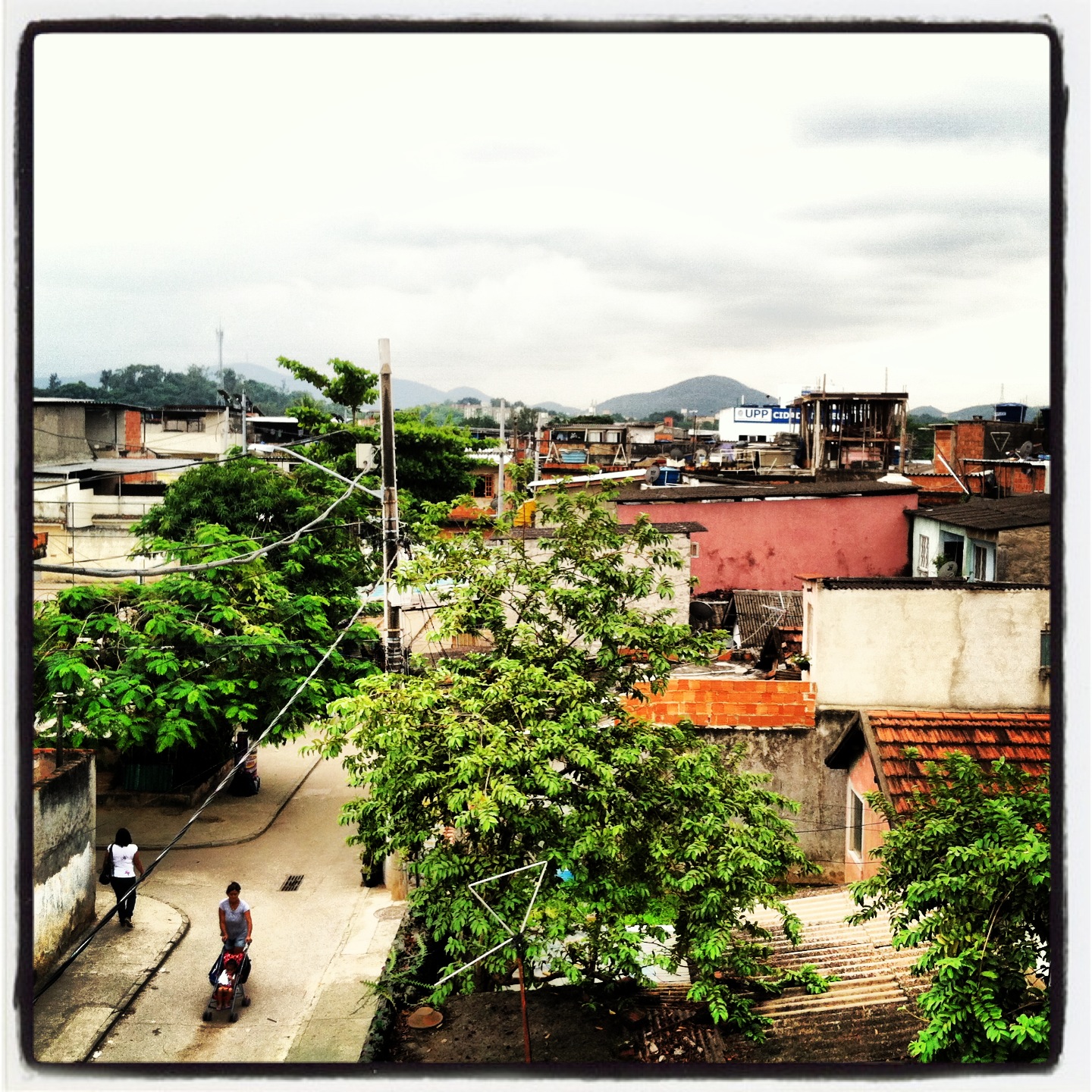 It’s been interesting watching the evolution of the City of God and of the favelas (slums) in general since the first time I was in Rio in 2008. At the time, pretty much every single one of the over one thousand favelas in the city was controlled by organized crime; either drug gangs made up of heavily-armed teenagers or militias of corrupt former police officers whose rule featured violent enforcement of rules and extorting residents for basic services (think the Mafia). Today, these two groups still exist and control many favelas as they always have, but a new armed force has arrived on the scene: the police! Yes, the military police, the armed wing of the State, who in the past would swoop into these vast urban shanty towns to kill, arrest, confiscate and then leave, have now begun the massive process of taking over and “pacifying” (their word) the favelas known as UPPs (Units of Pacifying Police).
The City of God was one of the first to be wrested from the control of the drug traffickers, and most residents here are overwhelmingly happy with the result: cops in the street and no more shoot-outs, no more open market-style drug dealing, and many improvements in the community, including newly paved roads, a 24-hour health clinic, a government-subsidized cafeteria with super cheap (and pretty decent) hot meals, and more… Of course, there are down sides to this new development; there is an obvious focus on favelas near wealthy areas of the city while other areas remain neglected, and some places have actually become more violent and drug-ridden as gangsters have fled to neighborhoods without the UPPs. Also, corruption and violence on the part of the cops continues as much as ever, with the human rights of poor people of color being routinely thrown out the window in favor of a shoot-first-ask-questions-later approach. To put things in perspective, consider this: the police kill many more people every year in the city of Rio, population 6 million, than in the entire country of the USA, population 300 million.
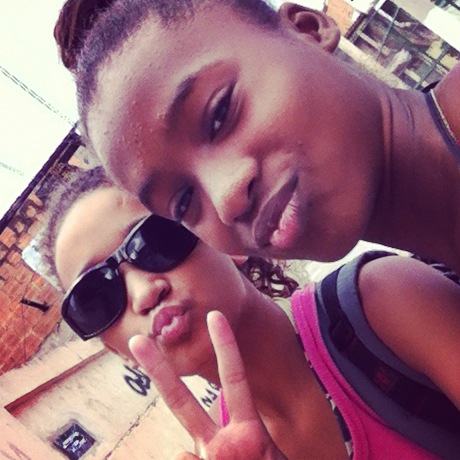
The kids of Cidade de Deus– so much character!
São Paulo
Posted on April 8, 2013
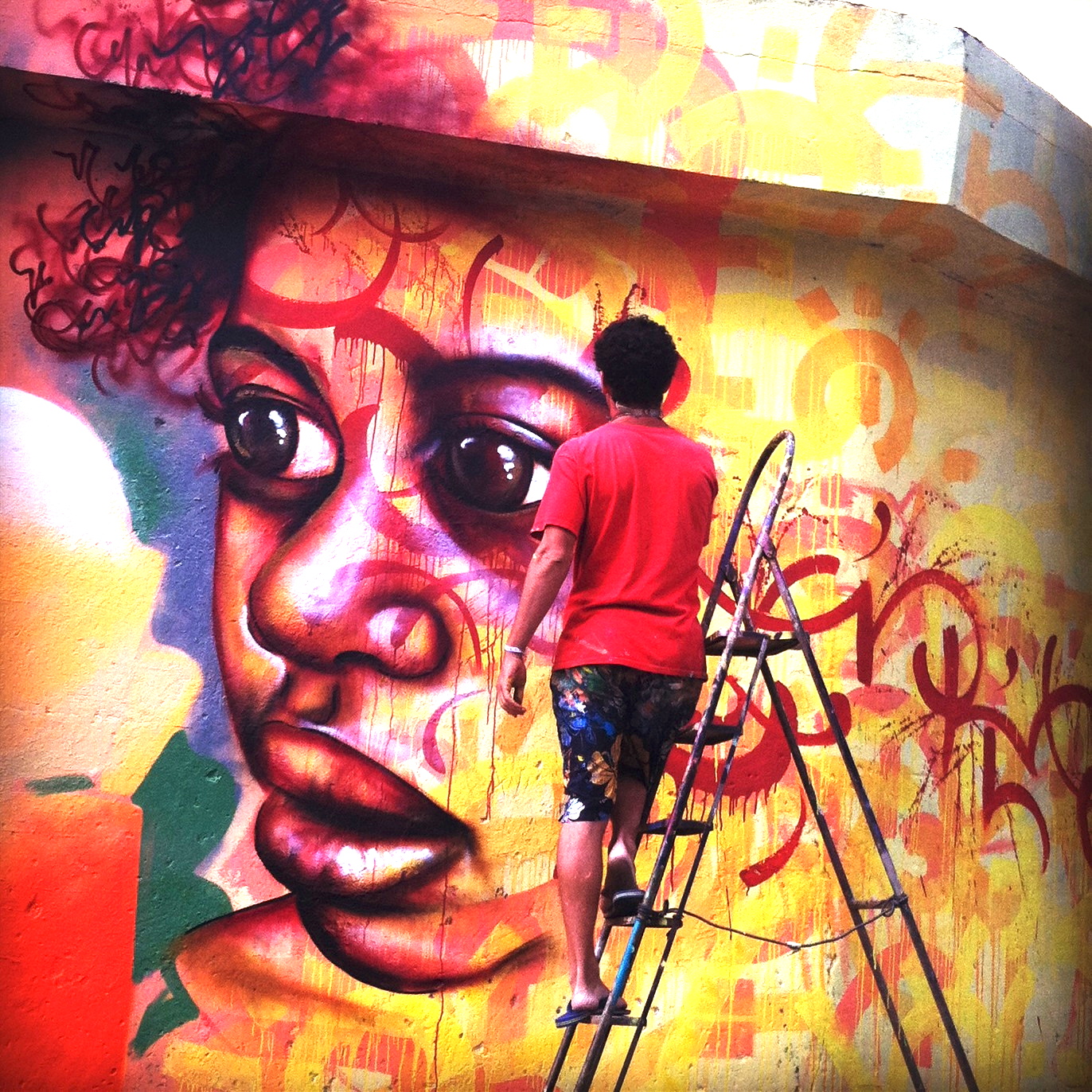 I wasn’t sure if I should stop by São Paulo before starting my job in Rio—I mean, I always wanted to visit one of the greatest centers of urban art in the world, but the only contacts I had there were some artists that I had met very briefly last year at an event they were participating in in the US. Would they even remember me? But my doubts were laid to rest when they not only remembered me but ended up being the most hospitable hosts ever! They invited me to stay at their houses, took me to a poetry and music event, showed me the modern and rich city center as well as the gritty favelas, introduced me to community social projects and invited me to participate in two graffiti and street art festivals, where I painted three pieces alongside amazingly talented local artists—all in 4 days!! Nope, didn’t sleep much but I left full of inspiration! São Paulo may not have tropical beaches and beautiful views like Rio does, but it makes up for it with world-class culture everywhere you go.
One of my favorite experiences was painting with the graffiti crew OPNI, who have created an arts and social project in a favela in the São Mateus neighborhood, where they are creating an amazing “outdoor gallery” of graffiti in which all the houses in the community are being painted by local and visiting artists.
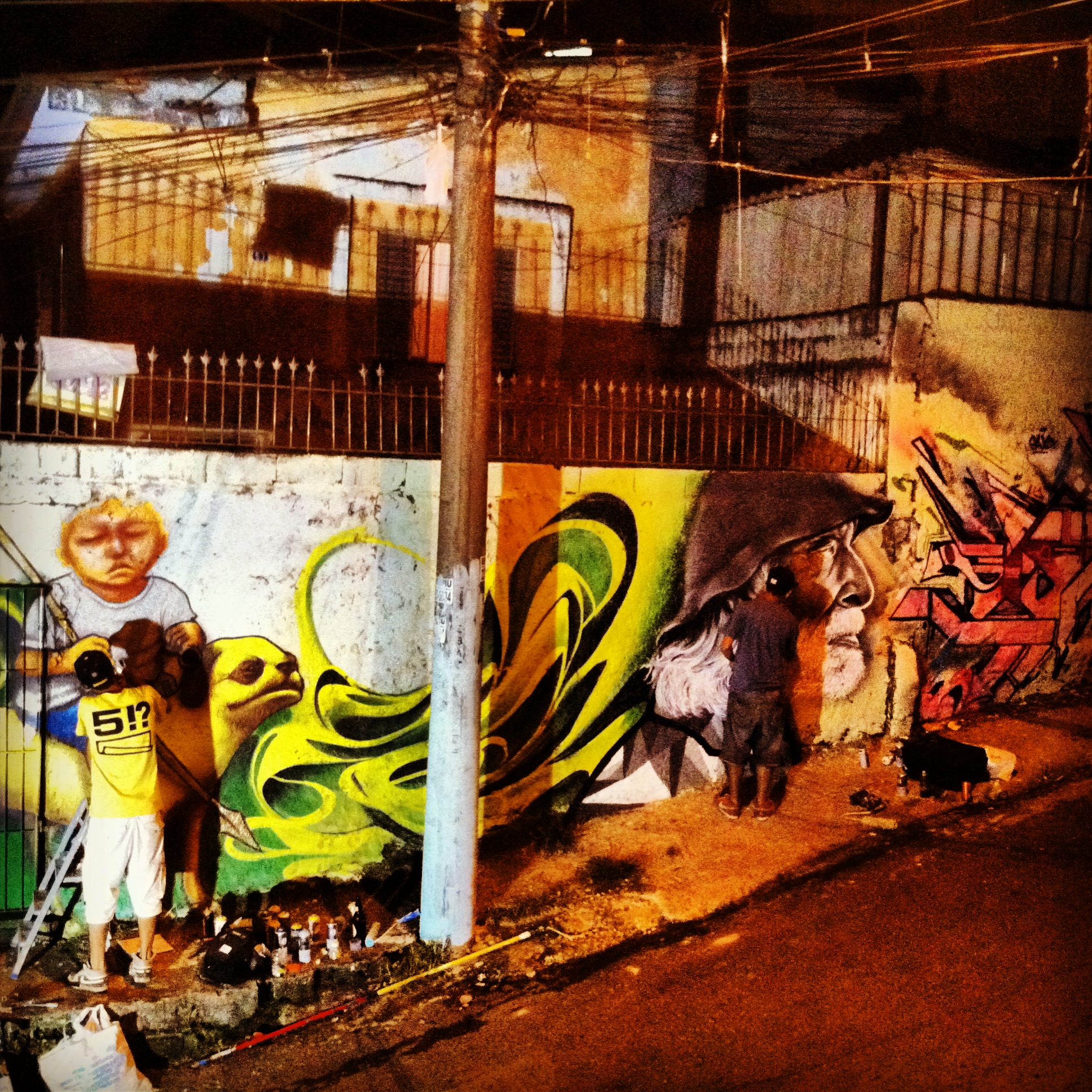
Graffiti artists working into the night in São Paulo

São Paulo, Brazil 2013: Joel’s contribution to an “outdoor gallery” in a favela in the São Mateus neighborhood, organized by the graffiti crew OPNI
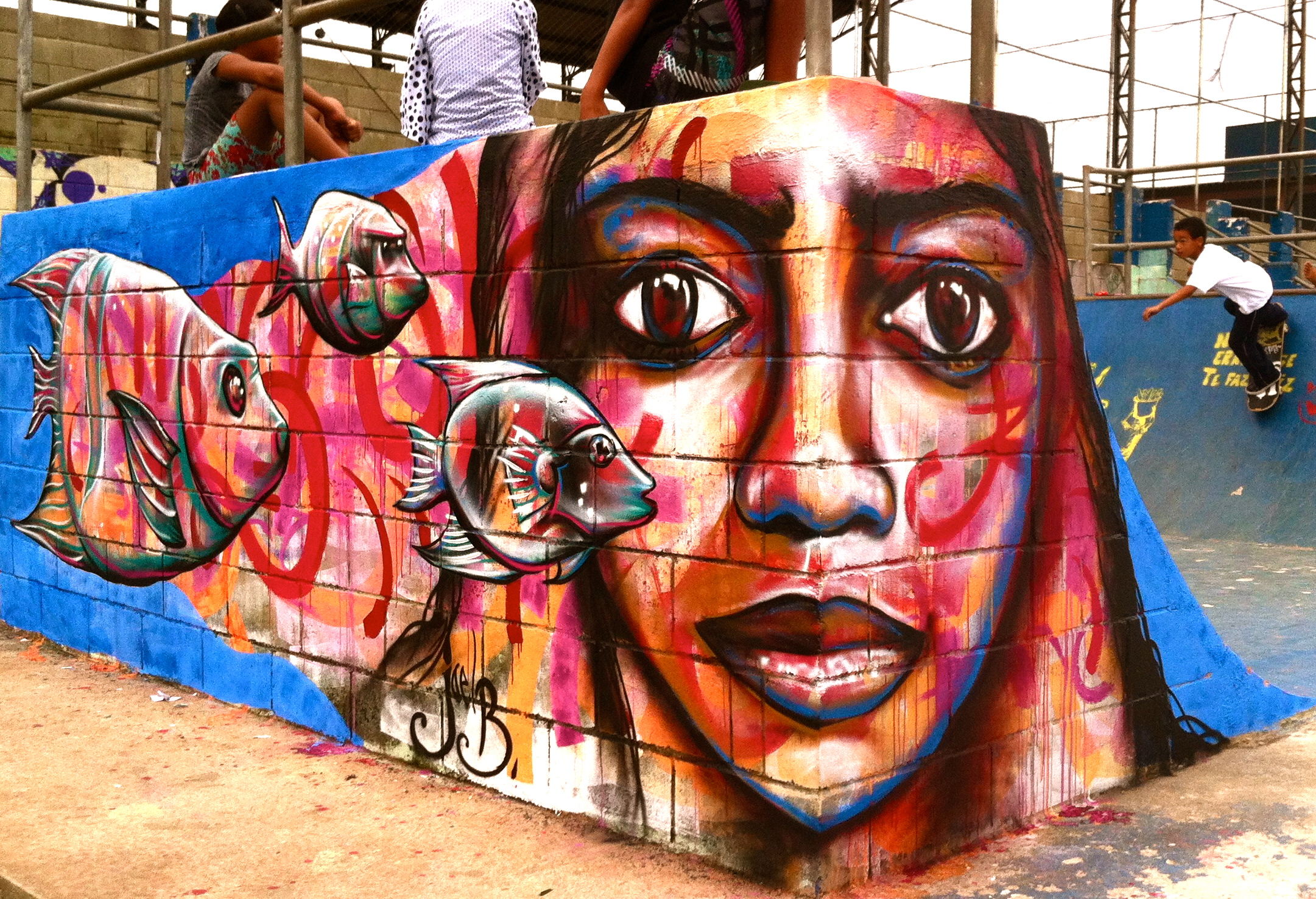
São Paulo, Brazil: Joel’s skate park piece

São Paulo, Brazil: Joel’s stairwell piece created during a graffiti art and music festival
MUSAS: outdoor graffiti gallery
Posted on April 2, 2013

Salvador da Bahia, Brazil: Joel’s contribution to the MUSAS outdoor street art/ graffiti art gallery and social project organized by the Nova 10ordem graffiti crew.
 These last few days I’ve been going to visit a seaside community in Salvador that my friend Tiago introduced me to—Solar da Unha, a poor neighborhood with an amazing view right on the bay. It has been “adopted” by a crew of super talented local graffiti artists called Nova 10ordem, which has set up a social arts project called MUSAS that involves painting amazing graffiti pieces on the houses, English and photography classes for kids, an art gallery where local and international artists can have exhibitions and an outdoor community movie night. I fell in love with the place and the project instantly, and decided I had to paint a piece! So for several days I met with the artists, painted one of the houses and swam in the bay whenever I felt too hot and sticky! –Joel B
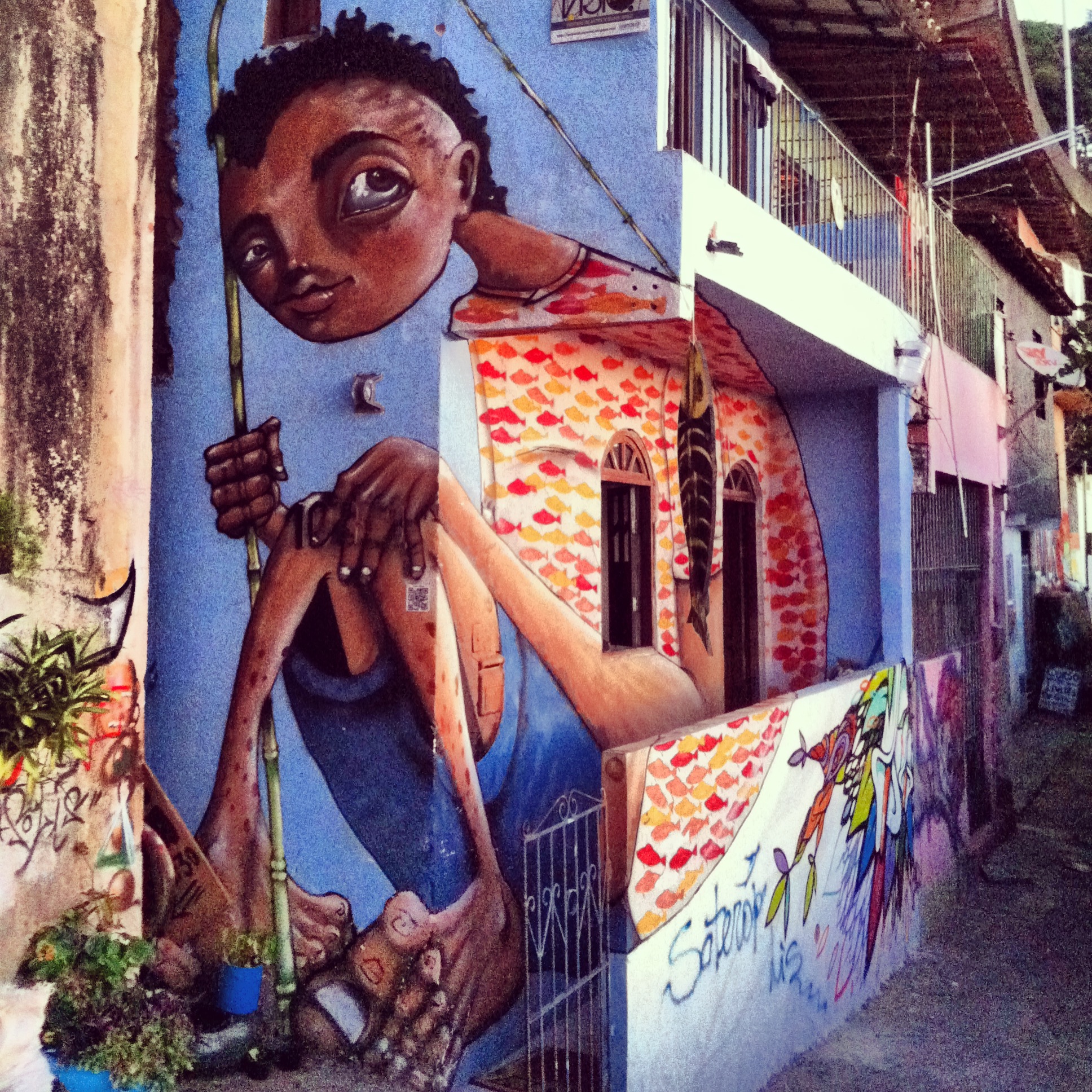
The MUSAS gallery with mural by the Nova 10ordem graffiti crew, Salvador da Bahia
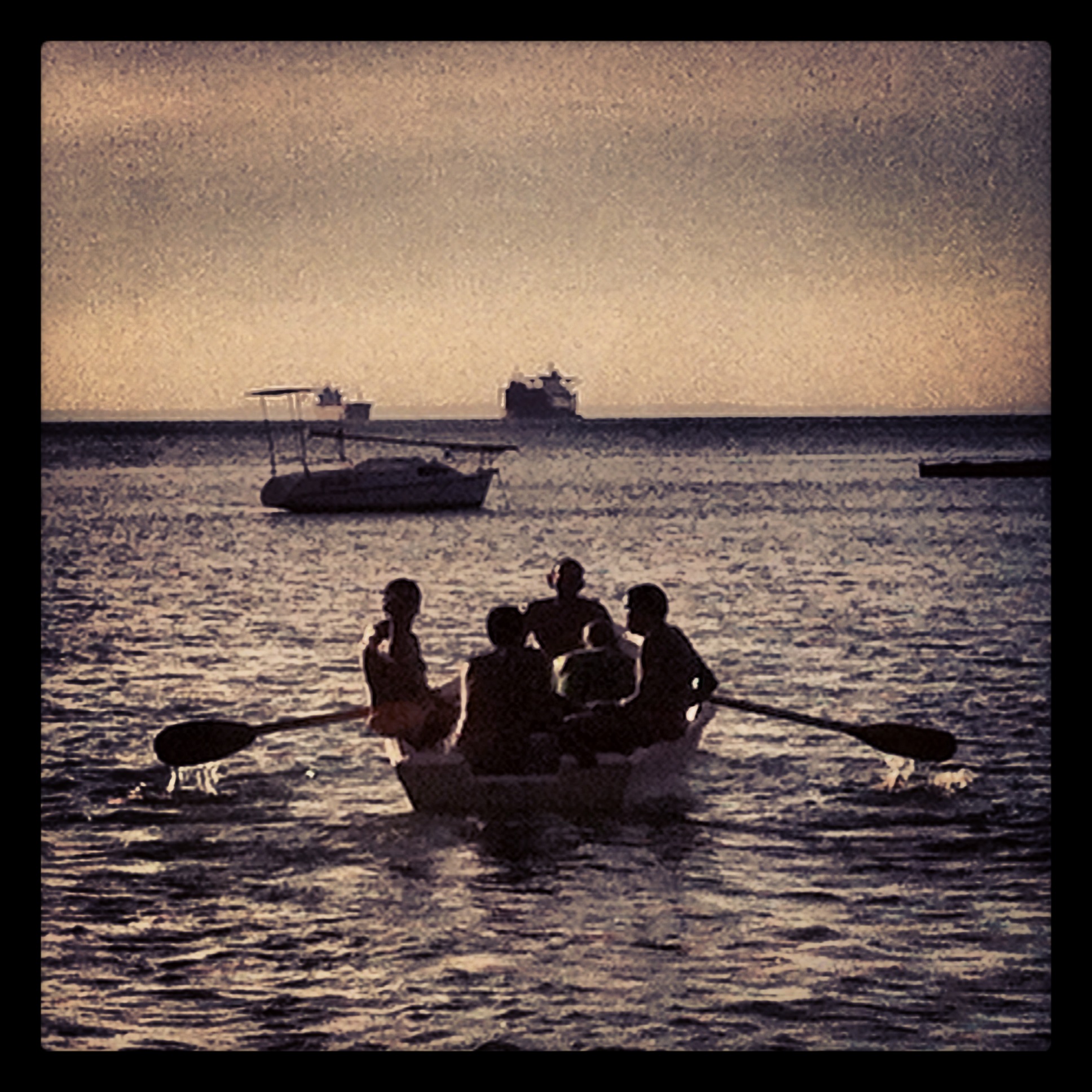
Locals going out to fish on the bay: Solar da Unha, Salvador da Bahia
Back in Brazil!
Posted on March 28, 2013

Oxossi Guerreiro (caboclo) in Salvador da Bahia, Brazil 2013: created for a community of Candomblé (Afro-Brazilian religion) where Joel has been returning to repeatedly since 2005
It feels like a homecoming being back in Salvador da Bahia after 2 and a half years—last time I was in Brazil I couldn’t make it up here. This was the first place that I ever spent time in Brazil, back in 2005, when I spent three life-changing months living and teaching classes in a terreiro de Candomblé, a center of Afro-Brazilian spirituality. While most of my paid work in Brazil has been in Rio de Janeiro since that time, I always try to make it up to Salvador to see my friends and visit the terreiro. It’s amazing to be around people who are modern in every way but at the same time have such a strong tie to their African ancestors, having kept their traditions alive throughout centuries of slavery and persecution. Even today the religion is strongly condemned, misunderstood and feared by wide swaths of society who consider it dangerous devil-worshipping or superstitious nonsense.
The ceremonies here are beautiful and mysterious; drumming, clapping, singing, and people going into trances as the orixás manifest themselves inside the human body. Of course, for an American this was, at first, all very interesting but difficult to accept as reality. I mean, spirits in people’s bodies? But if you had seen and, more importantly, felt some of things I did over the years I’ve been coming here, you would quickly realize that there is something to this kind of spirituality that cannot be dismissed as mere superstition. I’ve noticed that artists in general are especially drawn to Candomblé, which I believe is because it’s so intense; the concept is to not merely pray and be preached at– as is the case with so many religions– but also to actively interact with the spirit world. Believe it or not, the religions based on Yoruba and other African traditional beliefs are actually growing rapidly in the world today, reversing their centuries-long decline, and are believed to number in the hundreds of millions. These faiths incude Candomblé and Umbanda in Brazil, Santería in Cuba and Haitian Vodun, among others. –Joel B
Kibera Walls for Peace on NPR!!
Posted on February 20, 2013
We were so excited to learn that our youth arts project for peace has been featured on Morning Addition on NPR (National Public Radio). Click on the link to for audio and written coverage as well as some great pics…
http://www.npr.org/2013/02/19/171916072/kenyas-graffiti-train-seeks-to-promote-a-peaceful-election
Robbed by the cops!
Posted on February 17, 2013
 It began as a typical Saturday night out in Nairobi: friends, drinks, and lots of dancing in a hot, packed club. At around 3am three of my Kenyan friends and I left in good spirits, but as we walked down the gritty streets of downtown, three plain-clothes police officers approached us and asked for ID.
The police here in Kenya have a terrible reputation. Universally hated for their corruption and violence, their main objective is making money any way they can, with no regard for upholding the laws of the land. These three were no different; if a Hollywood movie director wanted to script some sleazy gangster cops these guys would be perfect for the role. The leader of the pack, who said he was an inspector, had droopy eyes and smelled of hard liquor. He informed me that since I only had a regular ID but no passport on me, I was under arrest and promptly slapped handcuffs on my wrist. My friends pleaded with the cops as they led me down the street, supposedly to the police station. We all knew they had no intention of taking me in. This was a robbery, not an arrest, and the only question was how much we would have to pay.
As they led me down the street for an hour, they arrested several more men along the way as my friends tried to work out a deal with them. Luckily, I’m not the type to freak out in these situations, and I kept my spirits up by reminding myself that this would make a good story later on. To give you an idea of just how sleazy these officers were, the inspector with the droopy eyes actually told one of my female friends that if she had sex with him right there and then he would let me go! She refused, and eventually we came to a deal with them for the amount we had collectively, 3,000 shillings (around US$35), and they let me go.
While this incident was just a bump in the road for me, it is much more serious for the thousands of Kenyans who are robbed by corrupt officers every day. Those who can’t pay are hauled off to jail, often for doing nothing wrong, and made to pay huge fines. You can imagine how this must affect impoverished families who have to pay their food and rent money just to pay off a crooked officer. Corruption is rampant at every level of Kenyan society, up to the highest politicians and businessmen, as it is in most developing countries. This is one of the most serious challenges to realizing the dreams of ordinary families, including education and job opportunities, better health care and security.
—Joel B
The Peace Train!
Posted on February 12, 2013
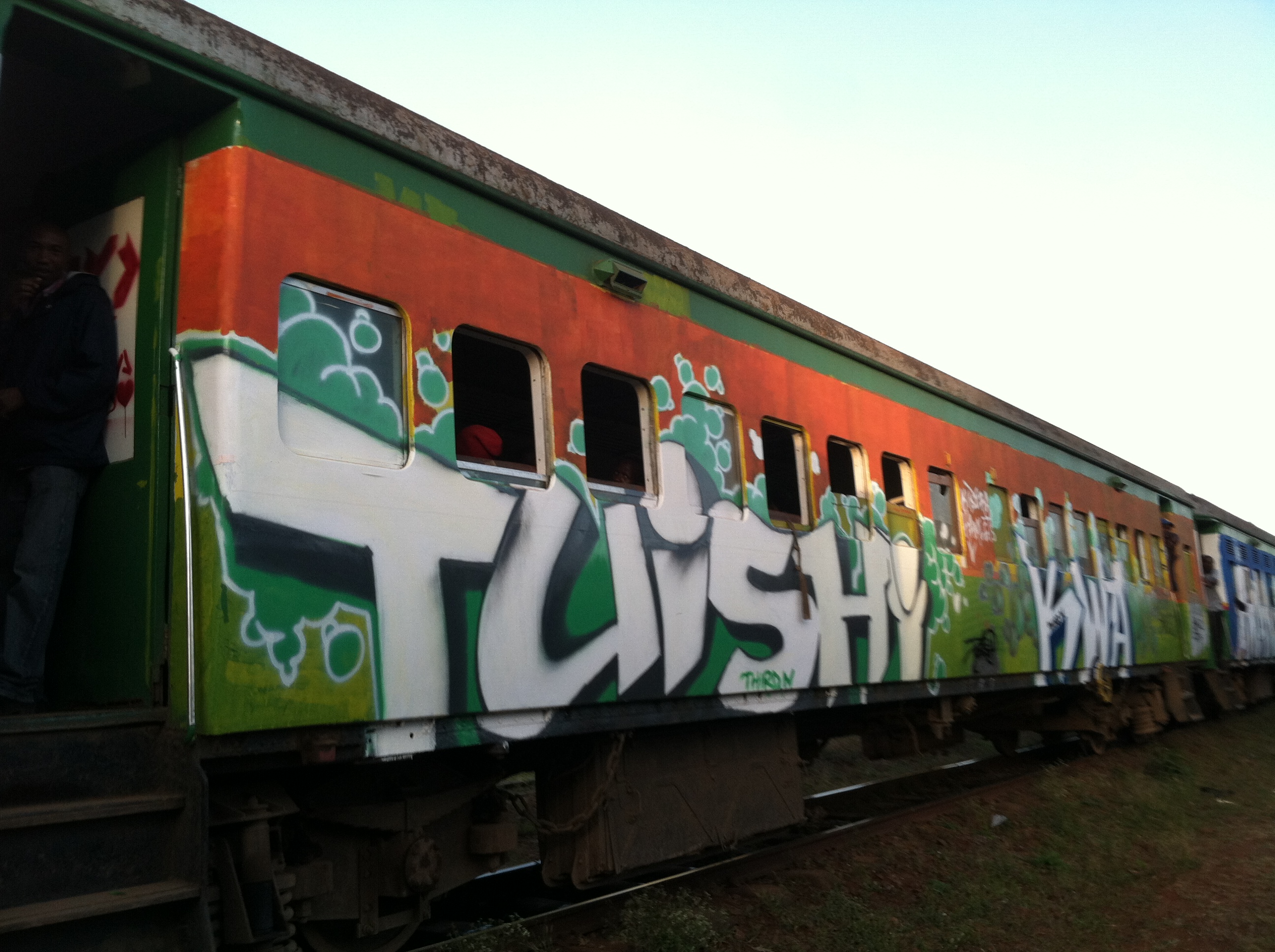
 On Sunday we got up early to head to the Nairobi’s train terminal for a historic happening; the Kibera Walls for Peace team was partnering with many of Nairobi’s best graffiti artists to create a HUGE peace mural along the entire side of a 10-car commuter train, which stops in Kibera and many other communities every day. The artwork features messages of peace for the upcoming election. The main phrase, “Tuwache Ukabila, Tuwache Ubaguzi, Tuishi Kwa Amani” was taken from one of our students’ poems, and roughly translates to “down with tribalism, down with prejudice, up with peace.” We got some great press coverage, including Al Jazeera English, NPR and several local media outlets.
On Monday, the 19th century train rolled out in public with a brand new look! Crowds were amazed all over Nairobi as they witnessed the spectacle and absorbed the messages. We all waited excitedly to see it in Kibera, a community where the train is an icon since it cuts right through the slum. The artwork was especially significant here, as the post-election violence of 2007 engulfed Kibera and rioters tore up the train tracks. The train authority is interested in having us paint many more trains, including those that go across the country, so we’re searching for sponsors to make this a reality! The goal of painting the trains is to bring attention for our ideals of peace for the election, and to show Kenyans that the youth are invested in this ideal and working hard for it. –Joel B

Nairobi graffiti artist Bankslave and Joel Bergner organized the Peace Train as part of the Kibera Walls for Peace project.




About Kibera Walls for Peace: Nairobi, Kenya
Posted on February 6, 2013

Nairobi, Kenya 2013: Kibera Walls for Peace youth arts project in one of Africa’s largest slums; working toward peace for the elections through public art and peace-building workshops with local youth.
The “Kibera Walls for Peace” youth public art project aims to encourage unity and cooperation between ethnic and political groups ahead of Kenya’s presidential election scheduled for March, 2013. Kibera, one of Africa’s largest slums, was strongly affected by the violence and political turmoil that engulfed Kenya after the last election, and preventing a repeat of this crisis is the our main objective. (Click here to learn about post-election violence in Kibera.)
The community- based youth organization Kibera Hamlets has organized 30 local youth to study peace-building and public art, culminating in the creation of a series of public murals in high-profile locations around Kibera, all aimed at easing tensions between different ethnic and political groups and encouraging peace. International artist and educator Joel Bergner is collaborating with the youth, leading educational workshops and creating the artwork with them. The process is being filmed and turned into a documentary by one of Nairobi’s leading filmmakers, Willie Owusu. It will be screened around Kenya and broadcast worldwide via the Internet and screenings, telling the story of Kibera youth striving to bring peace and stability to their people. Besides mural art, the project features music, dance and theater presentations by the youth in collaboration with local artists, which was presented at our inaugural event.
The idea for “Kibera Peace Walls” was born when Project Organizer Mia Foreman met two extraordinary young women who worked with Kibera Hamlets to uplift their community. After being inspired by the youth and meeting with director John Adoli, Foreman shared her experience with her friend Joel Bergner. Together, the three of them began their collaboration and the development of their plan.
This project was made possible by the generous support of the Open Society Initiative of East Africa and 140 individuals who contributed through our Kickstarter campaign. Asante sana!! (Thank you so much!)
There are three main objectives to this project:
1. Use public art to promote peace, understanding and cooperation between ethnic groups and political factions leading up to the 2013 presidential election, with the aim of building a more democratic and stable society. This will be achieved not only through the artwork itself, but also through the process of organizing local youth to work toward this goal.
2. Give Kibera youth an educational experience in which they learn about crucial issues in their community and society, learn team work, express themselves artistically, and have the opportunity to contribute to their neighborhoods by creating uplifting works of art that educate their fellow residents and promote peace.
3. To uplift and inspire residents of Kibera through public art. The murals created will be brightly-colored and skillfully rendered, allowing locals the daily enjoyment of art that all too often is only made available to wealthier citizens.
While these goals are intended to be met over the course of the project, they are also meant to have a long-lasting positive effect in the community. For a young person unfamiliar with his or her ability to create social change, this experience can be life- changing, and can lead to a life of activism and the desire to improve one’s community in a variety of ways. Even those who do not directly participate in the project will be inspired by the artwork, the documentary, and the idea that a group of Kibera youth worked toward the goal of peace and stability.
While “Kibera Walls for Peace” was created specifically in the context of encouraging peace ahead of the upcoming election, we intend to continue and expand the project into an ongoing arts and social action program in Kibera. The program, tentatively titled “Kibera Talking Walls,” will deal with with a variety of important social issues in the community through public art, including HIV and AIDS awareness, cultivating positive relationships, gender issues, and violence prevention. The students will explore and discuss these issues and learn to express their ideas through the arts. The program will involve the participation of local artists, who will work with the youth to create murals and perform music, dance and theater presentations.


First Mural Complete!
Posted on January 16, 2013

Here it is, the completed first mural! “Kabila langu ni mKenya” — “my tribe is Kenya”— is a call to unity in the face of the tribal divisions that have become much more intense during this election period. (see my post on tribalism below.) After coming up with the design during workshops with the children and teens, we cleaned off the wall and painted the background with non-toxic house paint using the colors of the Kenyan flag. The kids then did some abstract art and drawings related to the theme, which they had practiced in the workshops. We then drew the words and a local child’s face, both of which I touched up with spray paint. The kids were excited to use spray paint as well, so I broke out some stencils I had made inspired by Kenyan symbols and artwork. Each kid got a chance to strap on a mask and spray a stencil on the wall. This wall is in the entrance to the slum, so thousands of people pass by everyday. At first they seem confused, some even angry, at the sight of us painting the wall. But as the image and words became clear, everyone stopped to watch and had lots of positive comments for us! —Joel B
Four-Face
Posted on January 10, 2013


A New Ma’at
Posted on January 7, 2013


 Joel Artista